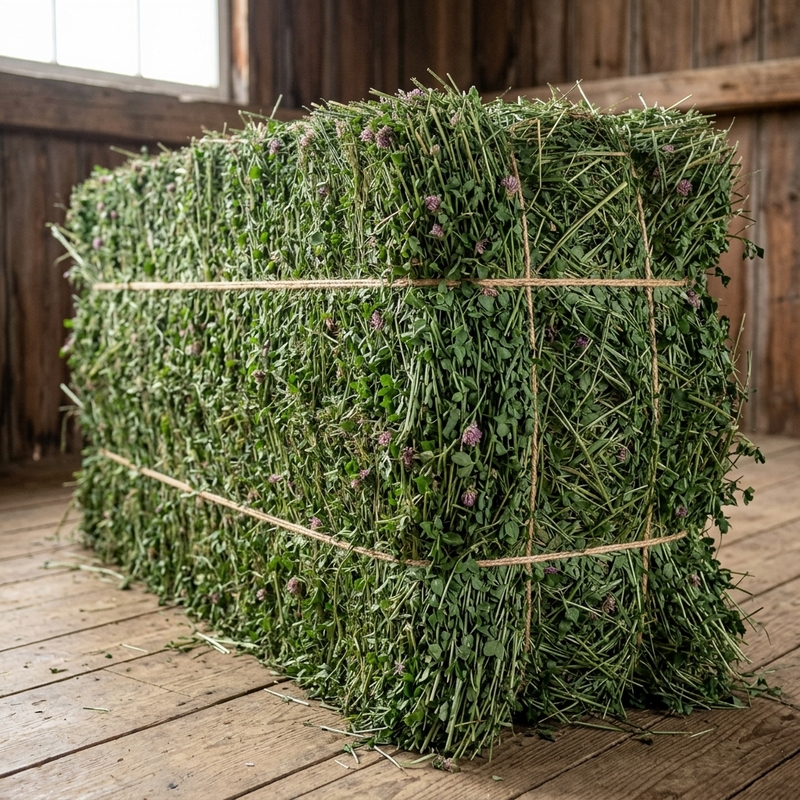
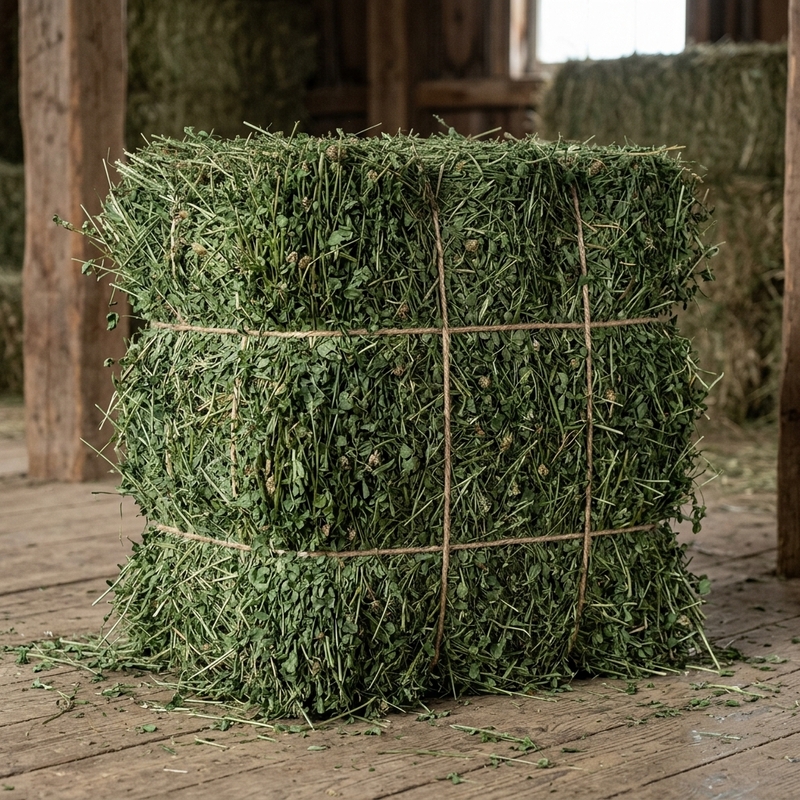
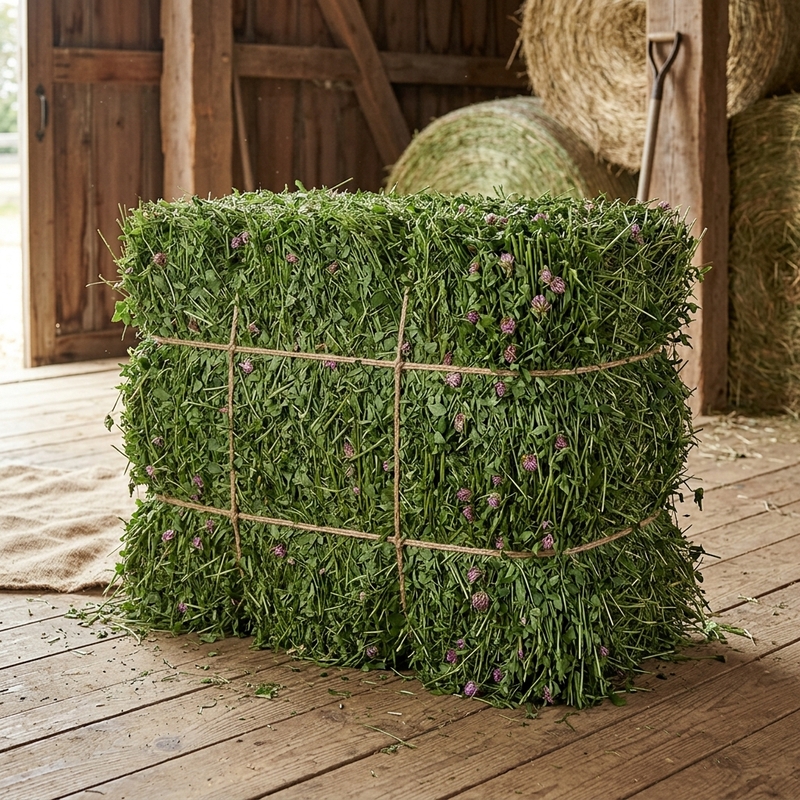
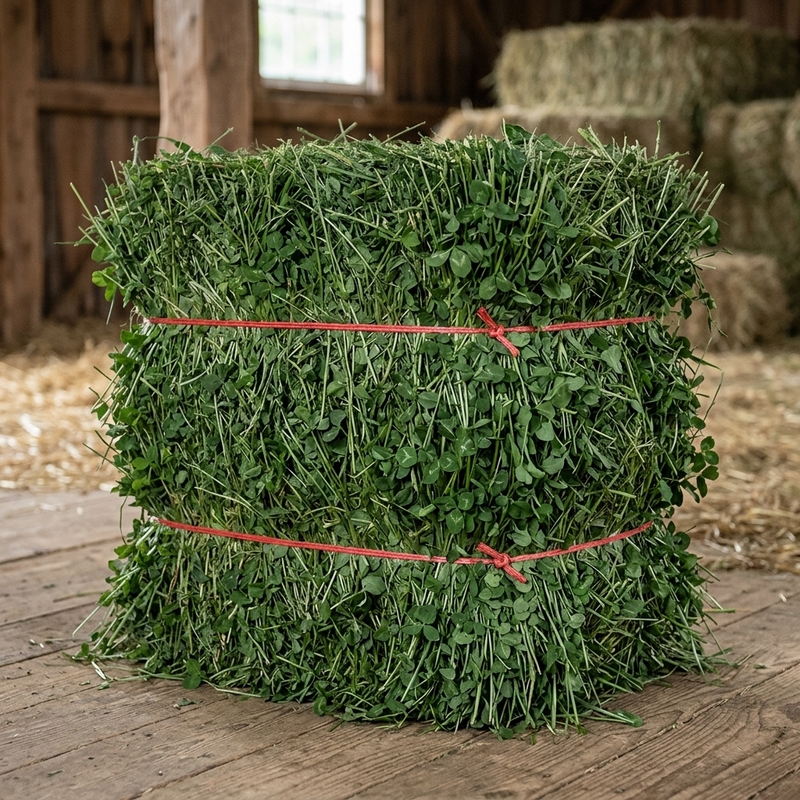
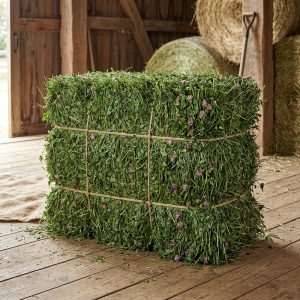
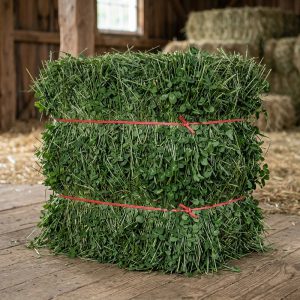
Premium Clover Hay (1st & 2nd Cutting Ultra Premium)
Price range: $276.30 through $10,307.28
Premium Clover Hay – The Nutrient-Dense Forage for Healthier Livestock
When you are looking for premium clover hay that delivers exceptional nutrition and consistent quality, our product stands head and shoulders above the rest. This premium clover hay is carefully cultivated to provide a rich source of protein, energy, and essential minerals that your animals need to thrive. Whether you are managing a commercial dairy herd or a small horse operation, this forage is designed to support optimal health and performance.
Let me tell you something about hay that I have learned over thirty years of farming. Growing top-quality forage is not just about planting seed and hoping for rain. It takes knowledge, timing, and a genuine love for the land. We manage our clover fields with precision, from soil testing to harvest, ensuring every cutting meets our rigorous standards. Our family has been in this business since the 1980s, and we have built relationships with growers across the Midwest and Pacific Northwest who share our commitment to excellence. You are not just buying hay when you order from us; you are investing in decades of experience and a network of farmers who care about quality as much as you do.
Nutritional Breakdown
Understanding the nutritional profile of your livestock feed is essential for making informed feeding decisions. Our premium clover hay consistently delivers outstanding nutrient values that support production and health. Take a look at the numbers below.
| Component | Typical Value | Benefit to Your Animals |
|---|---|---|
| Crude Protein | 16% – 19% | Builds muscle, supports milk production, and aids reproduction |
| Relative Feed Value (RFV) | 150 – 175 | High digestibility means more nutrition from every bite |
| Acid Detergent Fiber (ADF) | 28% – 32% | Lower ADF equals better energy availability |
| Neutral Detergent Fiber (NDF) | 36% – 42% | Balanced fiber promotes rumen health without limiting intake |
| Moisture | 12% – 14% | Properly cured to prevent spoilage and maintain freshness |
| Total Digestible Nutrients (TDN) | 63% – 67% | Reliable energy source for work, growth, and lactation |
| Calcium | 1.2% – 1.5% | Supports bone development and milk production |
| Phosphorus | 0.25% – 0.30% | Works with calcium for strong bones and energy metabolism |
Why Choose Our Premium Clover Hay
There are plenty of hay options out there, but our premium clover hay offers distinct advantages that set it apart. Here is why smart livestock owners make the switch.
- Incredible protein punch – With 16% to 19% crude protein, this hay often eliminates the need for expensive protein supplements. Dairy producers have told us they cut their supplement costs by 20% after switching to our clover.
- Superior palatability means less waste – Animals actually eat more of this hay because they love the sweet taste and soft texture. You will notice they clean up their feeders better, which means more nutrition goes into production and less ends up as wasted bedding.
- Harvested at the perfect moment – We cut our premium clover hay at early bloom, when the plant’s nutritional value is at its absolute peak. This results in fine stems, excellent leaf retention, and that vibrant green color you look for in quality forage.
- Versatile enough for multiple species – This hay works well for horses, dairy cattle, beef cattle, goats, sheep, and even small animals like rabbits and guinea pigs. One hay, many uses, simplifies your feeding program.
- Available in the sizes you need – We offer small square bales, large square bales, and round bales to fit your handling equipment. For larger operations, we provide wholesale hay and bulk hay options with convenient hay delivery straight to your farm.
Understanding Hay Cuttings
Not all hay is created equal, and the cutting makes a real difference in quality. Let us break down what each cutting offers so you can make the best choice for your operation.
First Cutting
First cutting is harvested in late spring. This cut tends to have more stem and less leaf, which means lower protein and higher fiber. It works well for mature beef cattle, dry cows, or as a filler forage when you need to stretch supplies. However, it is not our primary recommendation for high-producing animals.
Second Cutting
Second cutting is the sweet spot for premium clover hay. Harvested in early to mid-summer, this cut has a much better leaf-to-stem ratio and significantly higher protein content. The stems are finer, the leaves are plentiful, and the color is a beautiful rich green. This is the cut we recommend and supply as our standard offering because it delivers the best balance of nutrition and palatability for most livestock operations.
Third Cutting
Third cutting comes in late summer or early fall. While it can be very high in protein and extremely soft, yields are lower and the quality can be inconsistent depending on weather. It is often reserved for small animals or picky horses, but the cost per ton is typically higher. For most farmers, second cutting offers the best value.
Best Use Cases by Animal
Our premium clover hay is a versatile forage that performs well across many species. Here is how to get the best results for your specific animals.
Horses
This hay is a favorite among horse owners looking to add condition without excessive grain. It is particularly good for broodmares, growing foals, and performance horses in heavy work. The high protein supports muscle development, while the calcium promotes strong bones. Not recommended for horses with a history of urinary stones or metabolic issues that require restricted protein or calcium intake. Feeding tip: Transition slowly over 10 days and provide plenty of fresh water to support kidney function.
Dairy Cattle
Dairy producers consistently choose this dairy quality hay to boost milk production and butterfat content. The highly digestible fiber and energy help cows peak stronger and stay in condition longer. It is an excellent addition to any TMR. Not recommended for dry cows in the close-up period, where low-calcium diets are preferred to prevent milk fever. Feeding tip: Pair with high-quality corn silage for a balanced ration that maximizes profitability.
Beef Cattle
For beef operations, this cattle feed supports efficient weight gain in growing animals and helps maintain body condition in breeding stock. Cows on this forage tend to breed back faster and calve in better shape. Not recommended for animals with a known sensitivity to bloat, though this is uncommon with proper management. Feeding tip: Limit access for the first week, then increase to free-choice as animals adjust.
Goats and Sheep
Small ruminants thrive on the fine stems and rich nutrient profile of this hay. The soft texture makes it easy to chew, and the protein supports milk production in does and ewes. Not recommended for wethers or bucks prone to urinary calculi without careful mineral balancing. Feeding tip: Use elevated hay racks to reduce waste and prevent parasite contamination.
Rabbits, Guinea Pigs, and Chinchillas
Small pets enjoy the taste and softness of this hay as a treat or supplement to their regular grass hay. It adds variety and extra protein for young or pregnant animals. Not recommended as the sole hay source for adult small pets due to the high calcium content. Feeding tip: Offer a small amount daily alongside unlimited timothy or orchard grass for balance.
Pro Tip: Getting the Most from Your Premium Clover Hay
- Test every load – Forage quality can vary by cutting and field. A simple forage test gives you the data you need to balance rations accurately and save money on unnecessary supplements.
- Store under cover – Keep bales off the ground and protected from moisture. Even a little rain can ruin the outer layers and lead to waste. Good storage preserves your investment.
- Weigh your feed – Clover hay is denser than grass hay. What looks like a flake could weigh significantly more, so use a scale to track intake and avoid overfeeding.
- Monitor the transition – When switching to clover hay, watch for changes in manure consistency and feed intake. These are your best indicators that animals are adjusting well to the new forage.
Premium Clover Hay vs Timothy Hay
Both clover and timothy have their place in livestock feeding, but they serve different purposes. Here is how they compare so you can choose the right forage for your needs.
| Characteristic | Premium Clover Hay | Timothy Hay |
|---|---|---|
| Crude Protein | 16% – 19% | 8% – 10% |
| RFV Range | 150 – 175 | 85 – 120 |
| Calcium Level | 1.2% – 1.5% | 0.3% – 0.5% |
| Palatability | Superior – sweet and soft | Good – but less preferred by picky eaters |
| Best For | High production animals, growing stock, performance horses | Adult maintenance, easy keepers, low-protein diets |
| Cost Per Ton | Higher but more nutrition per pound | Lower but often requires supplementation |
Our Grower’s Promise
When you buy hay from us, you are getting more than just a product. You are getting a commitment to quality and transparency. Here is what we promise every customer.
- Tested for quality – We sample every cutting and verify protein, fiber, and moisture content before it leaves our barns.
- Clean and weed-free – Our fields are carefully managed to prevent weed contamination, so you get clean hay that protects your pastures.
- Properly cured – We bale at the ideal moisture level to preserve leaves and prevent mold, extending shelf life and maintaining quality.
- Full transparency – You will know the farm, harvest date, and cutting details for every load of hay we deliver.
- Reliable supply – Our grower network spans multiple regions, so we can keep your barn full even when local weather creates challenges.
- Real farmers, real support – When you have questions, you talk to people who understand livestock and forage. We live this business every day.
Storage and Handling Instructions
Proper storage is key to preserving the quality of your premium clover hay. Follow these steps to keep it fresh and nutritious for months to come.
- Choose a dry, ventilated location – Good airflow reduces the risk of moisture buildup and heating. Avoid enclosed spaces without ventilation.
- Elevate bales off the ground – Use pallets, tires, or gravel to prevent moisture wicking from concrete or dirt floors, especially important in humid conditions.
- Protect from rain and snow – A roof or quality tarp is essential. Even dew can penetrate the outer layer and lead to spoilage. If using tarps, ensure airflow to prevent condensation.
- Stack with care – For small square bales, use alternating patterns for stability and ventilation. Large squares and rounds should be placed with space between rows for airflow.
- Monitor regularly – Check for heat, unusual smells, or mold. Properly stored premium clover hay will retain quality for 12 to 18 months.
Frequently Asked Questions
How much protein does premium clover hay contain?
Our premium clover hay typically tests between 16% and 19% crude protein on a dry matter basis, making it one of the highest-protein forages available and an excellent alternative to alfalfa.
Can I feed this hay to horses with metabolic concerns?
Yes, but with caution. The nutrient density of clover hay can be too high for easy keepers or horses with insulin resistance. Work with your equine nutritionist to determine appropriate feeding rates.
Is this hay safe for pregnant or nursing animals?
Absolutely. In fact, it is one of the best choices for pregnant and lactating animals because the high protein and calcium levels support fetal development and milk production.
What is the shelf life of properly stored clover hay?
When stored correctly in a dry, ventilated space off the ground, our premium clover hay maintains excellent quality for 12 to 18 months without significant nutrient loss.
What bale sizes are available for wholesale orders?
We offer small square bales, large square bales, and round bales to suit any feeding system. For customers needing wholesale hay or bulk hay quantities, we can arrange hay delivery straight to your farm.
From our fields to your feeders, our premium clover hay represents the kind of quality that makes a real difference in animal health and farm profitability. We grow it with care, harvest it with precision, and deliver it with pride. When your animals thrive, we know we have done our job right. That is the promise we make with every bale.
| Cutting | 1st Cut, 2nd Cut |
|---|---|
| Package Format | 1 Pallet (18 Bales / 720 lbs), Half Truckload (22 Pallets / 396 Bales), Full Truckload (44 Pallets / 792 Bales) |
Be the first to review “Premium Clover Hay (1st & 2nd Cutting Ultra Premium)”
Related products
Reviews
There are no reviews yet.